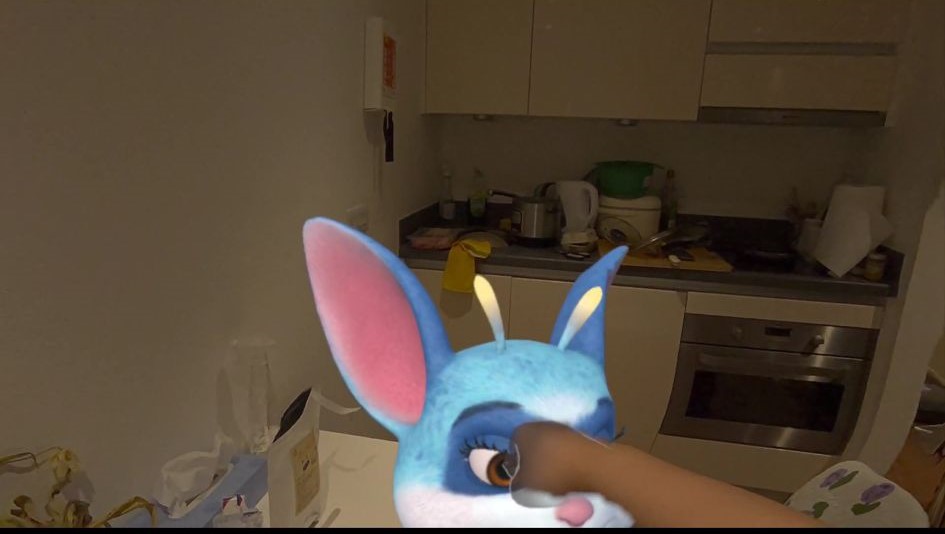
In our continuous pursuit to refine and enhance the user experience in mixed reality (MR) environments, we’ve recently conducted a series of innovative tests focusing on depth perception and object interaction within a simulated room model. This exploration is part of our broader effort to push the boundaries of what’s possible in MR technology.
The Test: Depth Perception and Object Interaction
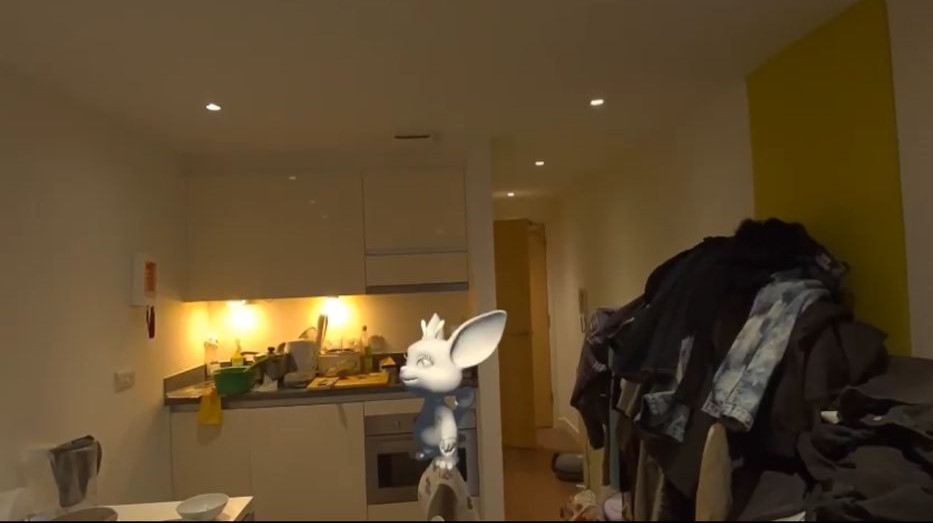
The primary goal of our latest test was to investigate how well virtual objects could be integrated into real-world spaces in terms of hiding and moving accurately on a room model. We used detailed 3D models and sophisticated spatial mapping techniques to create a virtual environment that mirrors a physical room.
Key Objectives:
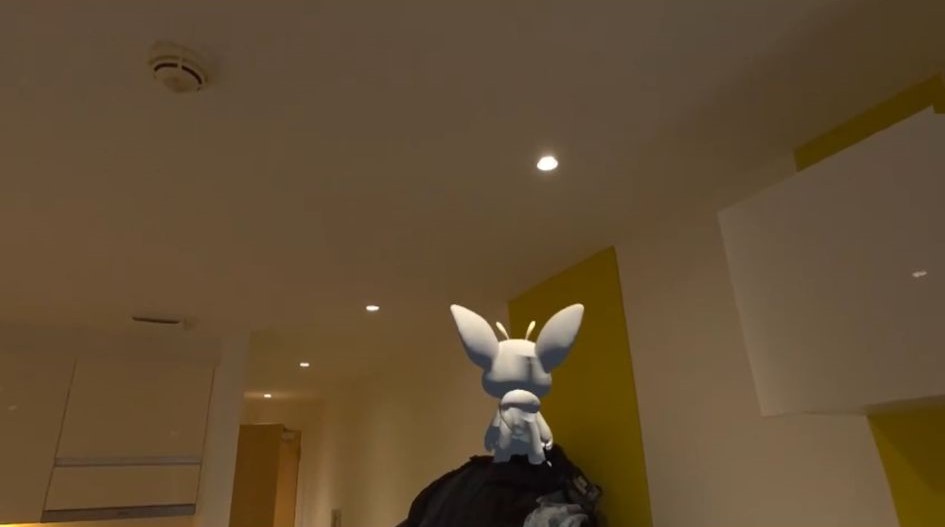
Depth Accuracy: Assess the MR system’s ability to render virtual objects at varying depths accurately, ensuring they align perfectly with the physical space as perceived by the user.
Object Hiding: Test the system’s capability to ‘hide’ virtual objects behind real-world structures within the room, such as furniture and doors, enhancing the realism and interactive possibilities of MR applications.
Seamless Movement: Evaluate the smoothness and accuracy of virtual objects moving over surfaces and around objects in the room, simulating real-world physics and interactions.
Technical Achievements
The results of our testing have been highly promising:
Spatial Mapping Accuracy: We’ve successfully demonstrated that our MR system can accurately map and understand the dimensions and layouts of physical spaces. This allows virtual objects not only to be placed correctly but also to interact realistically with the environment.
Advanced Object Interaction: Virtual objects in our tests could be effectively ‘hidden’ behind physical objects, and moved seamlessly across different surfaces, which are crucial for realistic MR applications.