The music box is a very important symbolic element in Moonbow. It runs through the development of the story, representing Ellie’s emotional journey and providing players with a way to explore her inner world through interaction. In this blog, I would like to share with you the design concept of the music box and its role in the narrative.
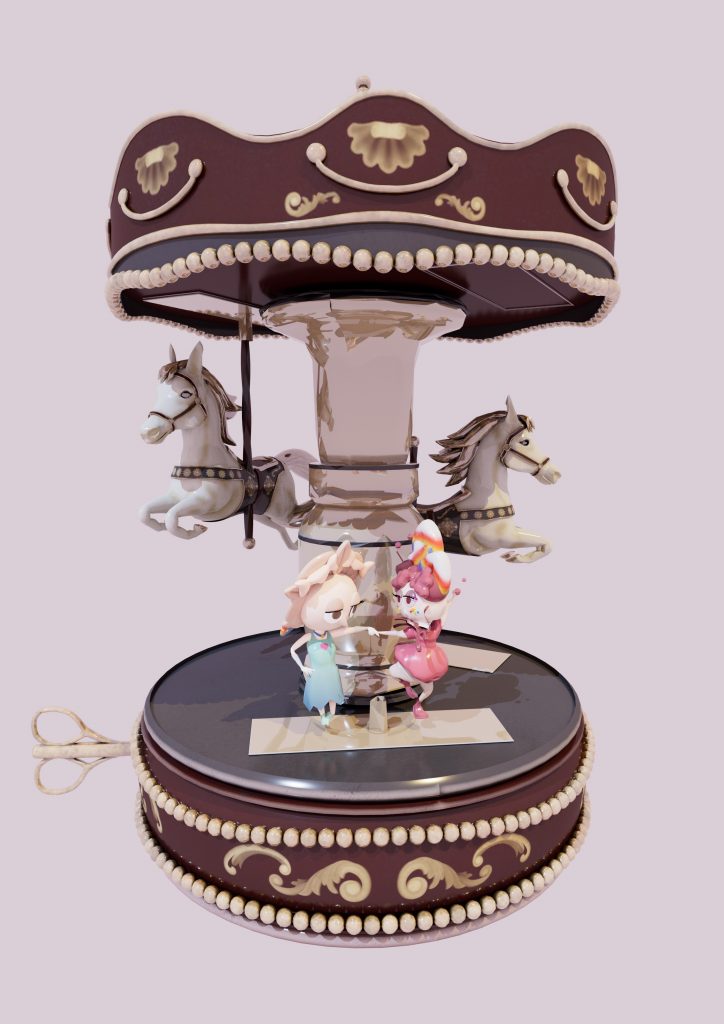
The music box is a very important symbolic element in Moonbow. It runs through the development of the story, representing Ellie’s emotional journey and providing players with a way to explore her inner world through interaction. In this blog, I want to share with you the design concept of the music box and its role in the narrative.
Opening: The rotation and rupture of the music box
At the beginning of the story, the player enters a dark space and hears the distant music gradually becoming clear. Then, a floating music box appears and gently rotates. The rotation of the music box symbolizes Ellie’s seemingly normal and stable life, but as the plot unfolds, the music box suddenly stops, breaks, and falls to the ground. This moment represents the sudden collapse of the traditional concepts imposed on Ellie’s life, and also symbolizes her loss of self-identity.
The broken music box brings a huge visual impact, and this rupture process also enhances the expression of emotion through the drastic change of sound effects, as if the disappearance of music means the rupture of emotion.
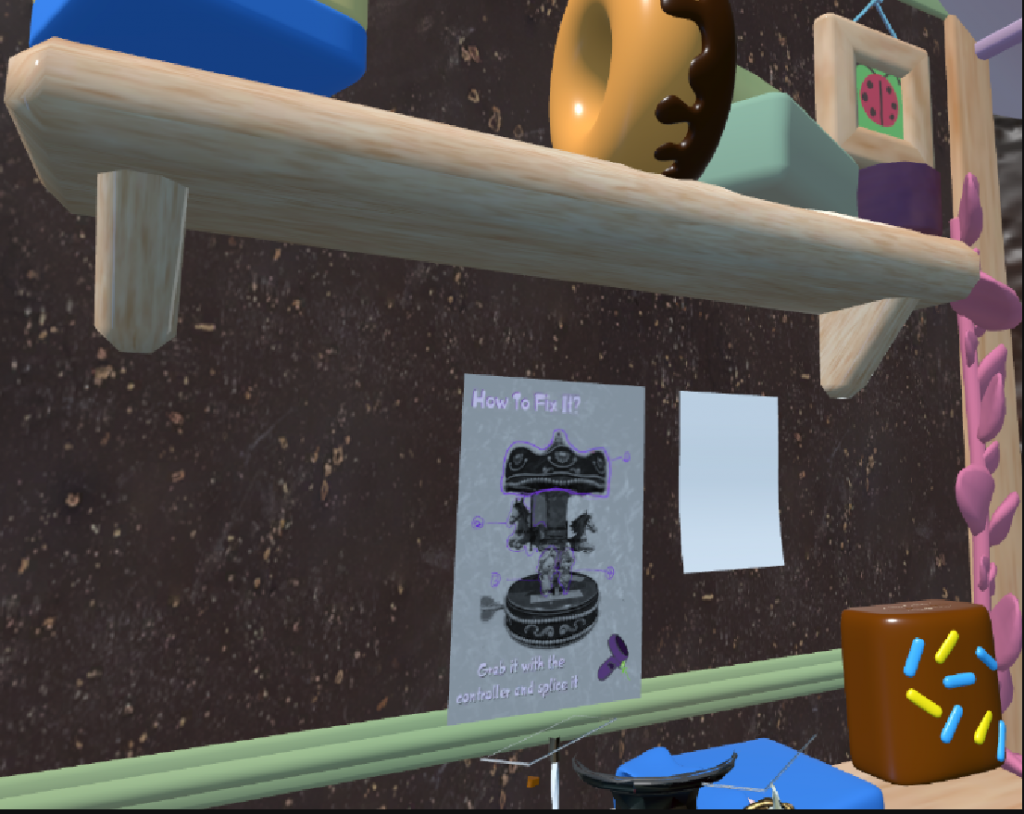
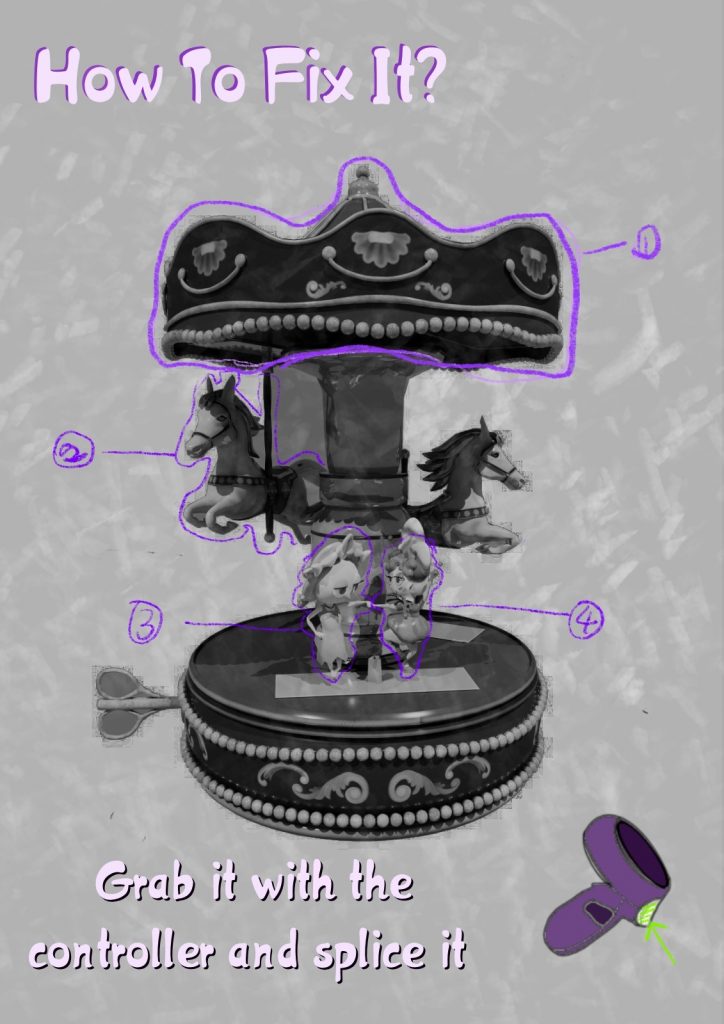
Interaction: Reassemble the Music Box
Afterwards, the player needs to take the initiative to pick up the scattered music box fragments on the ground and try to piece them together again. This interaction is a core part of the whole story, symbolizing Ellie’s attempt to pick up her broken memories and re-examine her relationship with Mei Lin. Players gradually pick up each piece to restore the music box to its original state, and each splicing triggers a different visual memory scene – from first meeting to love to family obstacles.
These interactions are not only simple physical operations, but also emotional reconnection, symbolizing Ellie’s reorganization and facing these memories in the depths of her heart.
Ending: Rotating Music Box – Suspense and Blankness
At the end of the story, the music box appears again. This time, the music box has been completely repaired and begins to rotate again in the final part of the story. This rotation symbolizes a new cycle, but this time its meaning is different – it symbolizes an acceptance of the past, and the unknown and possibilities of the future.
The music box does not clearly end during its rotation, and the music seems to stop at an unfinished note. This design is to leave suspense and an open ending to the story. Players can fill in these gaps from their own perspectives and imagine Ellie’s future. Will she choose to continue to follow her family’s expectations, or bravely pursue her own happiness? All of this is left to the players to understand and imagine.
Combination of symbolism and interactivity
As the core element of “Moonbow”, the music box is not only a prop, but also an important medium for narrative. It runs through Ellie’s entire emotional journey, from rupture to repair, and then to restarting the rotation. These processes not only show her emotional struggle and growth, but also allow players to experience each step of the emotional transition through interaction. This combination of symbolism and interactivity is an idea that I really want to express during the creative process-by piecing together the broken music box, the player is actually helping Ellie piece together her heartbroken memories, and it is also a re-recognition of her self-identity.